One of our artists from last year's conference, photographer and filmmaker Julie Thi Underhill, talks about her photographs documenting her familial ties to Cham in Viet Nam on KPFA's APEX Express. Here's a bit more about her body of work from her profile at Lightstalkers, a non-profit on-line photographers' resource:
Born in the U.S. in 1976, Julie Thi Underhill began photographing in 1994. She commenced in 1999 a series on Việt Nam, continued in 2001 while studying the war that joined her Vietnamese Cham-French mother and American father. For Crossing Fire, a forthcoming documentary of postwar healing discussions between Vietnamese and Salvadoran women (Sisters Meeting Sisters delegates,) in 2002 Julie photographed and interviewed women combatants, organizers, and survivors of war in El Salvador. Julie’s oral history of Robert Cagle, an American veteran of the war in Việt Nam, is included in Alex Bloom’s Takin it to the Streets A Sixties Reader. Julie’s war dreams memoir poetry is included in Maxine Hong Kingston’s Veterans of War Veterans of Peace.
During her 2005-06 fellowship with the Joiner Center for the Study of War & Social Consequences at UMass-Boston, Julie examined the cultural survival of the Cham, whose 1,500-year-old Austronesian kingdom preceded the Vietnamese. This work continued a decade of research into the origins and syncretic traditions of her maternal ancestry. In Spring 2006, with family, Julie returned to Phước Lập, Việt Nam to photograph, film, & participate in her Cham grandmother’s Second Burial. In Fall 2007, Julie begins her Master’s and Ph.D. in Comparative Ethnic Studies at UC Berkeley, where she’ll focus upon the intersections between Cham historical memory, gender and ethnic identities, spiritual beliefs, and acculturation. As a Chancellor’s Fellow, she’ll also finish editing Second Burial and continue to exhibit her photographs and write memoir essays and poetry.
Although Julie’s series also include portraits and landscapes from Africa, El Salvador, Mexico, Spain, the United Kingdom, and the United States, her most intimate and cherished work is from her mother’s homeland.
21 April 2009

25 March 2009
ANNOUNCEMENT: 2009-2010 UC Irvine Libraries Southeast Asian Archive Visiting Researcher Award
The UC Irvine Libraries is pleased to offer an award of $500 to one individual to use the research collections in the Southeast Asian Archive, part of the UC Irvine Libraries Special Collections and Archives.
The Southeast Asian Archive was established in 1987 to document the experiences of refugees and immigrants from Cambodia, Laos, and Vietnam who came to the United States, and especially to California. The Archive’s strengths include materials relating to the resettlement of Southeast Asian refugees and immigrants in the United States (and to a lesser extent, worldwide), refugee camp and other experiences of the “boat people” and land refugees, the development and progress of new ethnic communities, and the culture and history of Cambodia, Laos, and Vietnam. There is a special focus on materials pertaining to Southeast Asian Americans in Orange County and California. Holdings are in English and in Southeast Asian languages (primarily Vietnamese), and include organizational records, personal papers, books, periodicals, and a wide array of unique and ephemeral material. For more information about the Southeast Asian Archive, consult the website.
The award is intended for a researcher who lives outside of Orange County and is not affiliated with UC Irvine. Faculty, students, and independent researchers are encouraged to apply. Research should be conducted between June 2009 and March 2010. Shortly after visiting the Southeast Asian Archive, the recipient must provide a one-page statement of his or her research findings, which may be edited and used in the UC Irvine Libraries' publications. The award is intended to generally defray expenses for traveling to Irvine and conducting research in the Southeast Asian Archive. Funds will be distributed in two installments, before and after the completion of the research project.
The application deadline is May 15, 2009. Applications will be judged according to the relevance of the proposal to holdings of the Southeast Asian Archive, the proposed outcome of the research, and the qualifications of the applicant. The recipient will be notified before June 1.
A generous gift from an anonymous donor has made this annual award possible.
Send the following information to spcoll@uci.edu.
1. Up-to-date resume or CV2. Applicant name:
3. Address:
4. Telephone:
5. Email:
6. Title of project
7. Brief description of proposed research (no more than 500 words)
8. Collections or items that you anticipate using and how they are relevant to your proposed research (no more than 500 words). For information about the collections’ strengths, make sure to consult the following page: http://www.lib.uci.edu/libraries/collections/special/coll/seaa/strengths.html
9. Proposed outcome of the research (no more than 500 words)
10. One letter of reference from someone familiar with your research
11. Proposed dates for visiting the Southeast Asian Archive
More information about traveling to the UC Irvine campus is available at http://www.lib.uci.edu/libraries/collections/special/about/visitor_information.html. For more information about the Southeast Asian Archive and the award, please contact Christina Woo, Acting Southeast Asian Archive Librarian, at cjwoo@uci.edu.
SCREENING: Trang Noi Day Gieng/The Moon at the Bottom of the Well
The Institute of Vietnamese Culture and Education is screening Trang Noi Day Gieng (The Moon at the Bottom of the Well), directed by Nguyen Vinh Son, at multiple locations nationwide throughout the end of March and April. Please check the link for screening times and locations.
The film's synopsis is as follows: "Hanh, a high school teacher in Hue, Vietnam, and her husband, Phuong, the school's principal, share a seemingly peaceful and happy life. Though she loves her husband deeply, there is one thing she is unable to give him - a child. Hanh thus facilitates an arrangement for her husband to have a child with another woman. The surrogate pregnancy must be concealed or they will be subject to public scorn. Unfortunately, the secret gets disclosed and jeopardizes Phuong's career. To protect her husband, Hanh sacrifices their marriage, only to find out later he is not worthy of her love. Despairing, Hanh never expects to find happiness again, but nevertheless stumbles on it in the most unexpected place: the underworld."
The film's synopsis is as follows: "Hanh, a high school teacher in Hue, Vietnam, and her husband, Phuong, the school's principal, share a seemingly peaceful and happy life. Though she loves her husband deeply, there is one thing she is unable to give him - a child. Hanh thus facilitates an arrangement for her husband to have a child with another woman. The surrogate pregnancy must be concealed or they will be subject to public scorn. Unfortunately, the secret gets disclosed and jeopardizes Phuong's career. To protect her husband, Hanh sacrifices their marriage, only to find out later he is not worthy of her love. Despairing, Hanh never expects to find happiness again, but nevertheless stumbles on it in the most unexpected place: the underworld."
CONFERENCE: Agent Orange: Landscape, Body, Image
Agent Orange: Landscape, Body, Image
Conference and Exhibit
University of California, Riverside
California Museum of Photography
May 02, 2009 - August 29, 2009
Opening Reception: May 02, 6:00 PM - 9:00 PM
Agent Orange: Landscape, Body, Image features photographs and installations by Goro Nakamura, Dinh Q. Lê, Doan Duc Minh, and Binh Danh. Since the 1960s, Agent Orange has come to symbolize the widespread tragedy of war and its silent legacies that persist for generations in damaged ecosystems and in the genetic and social landscapes of human bodies in Vietnam and elsewhere. The artists explore through images the enduring in/visibility of dioxin as it continues to mark both landscape and body. Curated by Lan Duong, Assistant Professor, Media and Cultural Studies, UC Riverside and Christina Schwenkel, Assistant Professor, Anthropology, UC Riverside.
A 3-day conference in association with the exhibit will take place on May 7 - 9, 2009, and will feature keynote presentations and a panel discussion with the artists, along with film screenings. Events and exhibition organized by UCR Professors Christina Schwenkel, David Biggs, and Lan Duong. Sponsored by the UC Pacific Rim Research Foundation, SEATRiP, Center for Ideas and Society, and the Department of Media and Cultural Studies.
For more information, see: http://www.seatrip.ucr.edu/
http://www.cmp.ucr.edu/
Conference and Exhibit
University of California, Riverside
California Museum of Photography
May 02, 2009 - August 29, 2009
Opening Reception: May 02, 6:00 PM - 9:00 PM
Agent Orange: Landscape, Body, Image features photographs and installations by Goro Nakamura, Dinh Q. Lê, Doan Duc Minh, and Binh Danh. Since the 1960s, Agent Orange has come to symbolize the widespread tragedy of war and its silent legacies that persist for generations in damaged ecosystems and in the genetic and social landscapes of human bodies in Vietnam and elsewhere. The artists explore through images the enduring in/visibility of dioxin as it continues to mark both landscape and body. Curated by Lan Duong, Assistant Professor, Media and Cultural Studies, UC Riverside and Christina Schwenkel, Assistant Professor, Anthropology, UC Riverside.
A 3-day conference in association with the exhibit will take place on May 7 - 9, 2009, and will feature keynote presentations and a panel discussion with the artists, along with film screenings. Events and exhibition organized by UCR Professors Christina Schwenkel, David Biggs, and Lan Duong. Sponsored by the UC Pacific Rim Research Foundation, SEATRiP, Center for Ideas and Society, and the Department of Media and Cultural Studies.
For more information, see: http://www.seatrip.ucr.edu/
http://www.cmp.ucr.edu/
19 March 2009
CFP: Modern Language Association Annual Conference 2009 Panel Proposal
Panel Title: Memory Work and Southeast Asian American Narrative
This panel focuses its attention on Southeast Asian American narrative. Beginning with the concept of "memory work," which suggests labors of remembrance and debates over the forms such remembrance takes, this panel seeks presentations that examine the connections between history and memory in Southeast Asian American cultural production. For example, how does Lan Cao's Monkey Bridge use the memory of the Vietnam War in the articulation of a Vietnamese American identity? What is at stake in the work of Cambodian American writers like Loung Ung and Chanrithy Him who remember the "Killing Fields"? How does Monique Truong's Book of Salt use cultural memory? What is the role of political memory in Carlos Bulosan's America is in the Heart? Possible topics include but are not limited to representations of genocide, state-sanctioned mass violence, negotiations of U.S. empire, notions of justice, and questions of ethics. Please submit a 250-word abstract and! 1-page curriculum vitae via e-mail to cathy.schlund-vials@uconn.edu . The deadline for submission is March 25, 2009. Decisions will be made soon after the deadline.
This panel focuses its attention on Southeast Asian American narrative. Beginning with the concept of "memory work," which suggests labors of remembrance and debates over the forms such remembrance takes, this panel seeks presentations that examine the connections between history and memory in Southeast Asian American cultural production. For example, how does Lan Cao's Monkey Bridge use the memory of the Vietnam War in the articulation of a Vietnamese American identity? What is at stake in the work of Cambodian American writers like Loung Ung and Chanrithy Him who remember the "Killing Fields"? How does Monique Truong's Book of Salt use cultural memory? What is the role of political memory in Carlos Bulosan's America is in the Heart? Possible topics include but are not limited to representations of genocide, state-sanctioned mass violence, negotiations of U.S. empire, notions of justice, and questions of ethics. Please submit a 250-word abstract and! 1-page curriculum vitae via e-mail to cathy.schlund-
18 March 2009
NEWSFLASHES
The new Hmong Studies Newsletter for March 2009 is out, and features a list of new theses and academic essays in and around the growing field of Hmong and Hmong/American studies.
The 2009 Vietnamese International Film Festival is almost upon us. Check out the program schedule for films (including features, shorts, and documentaries), times and locations. There is a special spotlight on Dustin Nguyen, best known to children of the '80s as "Harry Ioki" from 21 Jump Street, and to a new generation of Asian American studies students as the actor Troy Poon, the most poignant figure in Justin Lin's Finishing the Game. His most recent vehicles, however, are Vietnamese-produced films including The Rebel and Huyen Thoai Bat Tu (The Legend Is Alive, The Immortal Legend). There are also several new documentaries being screened, including Operation Babylift: The Lost Children of Vietnam and A Village Called Versailles (a post-Katrina story about the Vietnamese of New Orleans), as well as a screening of the complete Blindness Series by Tran T. Kim Trang.
The 2009 Vietnamese International Film Festival is almost upon us. Check out the program schedule for films (including features, shorts, and documentaries), times and locations. There is a special spotlight on Dustin Nguyen, best known to children of the '80s as "Harry Ioki" from 21 Jump Street, and to a new generation of Asian American studies students as the actor Troy Poon, the most poignant figure in Justin Lin's Finishing the Game. His most recent vehicles, however, are Vietnamese-produced films including The Rebel and Huyen Thoai Bat Tu (The Legend Is Alive, The Immortal Legend). There are also several new documentaries being screened, including Operation Babylift: The Lost Children of Vietnam and A Village Called Versailles (a post-Katrina story about the Vietnamese of New Orleans), as well as a screening of the complete Blindness Series by Tran T. Kim Trang.
17 March 2009
EXHIBIT: FOB II Online
The controversial art exhibition FOB II: Art Speaks, sponsored by the Southern California-based Vietnamese American Arts and Letters Association (VAALA), is now viewable in part online, along with commentaries by curators, included artists, and scholars. Opened and prematurely closed in January 2009, the art exhibition and the protests (focused on the inclusion of a photograph featuring a teenaged Vietnamese girl in a red-and-yellow-starred tank top and a small bust of Ho Chi Minh) comprise a particularly rich moment for critical examination.
CFA: Got Announcements?
Do you have an essay, dissertation or book you'd like to announce? Please drop us a line to let us know. We'd especially like to compile a list of dissertations being completed this academic year to share, as part of building a community of engaged scholars.
10 February 2009
ANNOUNCEMENT: DVAN Online
The Diasporic Vietnamese Artists Network is finally online! DVAN's aim is "to promote artists from the Vietnamese diaspora whose work in literature, visual art, film, and performance art enriches our communities and strengthens ties between Vietnamese across the globe. We undertake to support this body of work through cultural events, exhibits, conferences and publications that explore the connections between art and society."
The website features upcoming events and shows --of which there are many, such as the upcoming TransPOP symposium at UC Berkeley on Valentine's Day, take a date!-- and works by artists with links to their galleries online. The website promises to become a portal for connecting to and with Vietnamese artists across the diaspora (their scope in international), so bookmark this one!
The website features upcoming events and shows --of which there are many, such as the upcoming TransPOP symposium at UC Berkeley on Valentine's Day, take a date!-- and works by artists with links to their galleries online. The website promises to become a portal for connecting to and with Vietnamese artists across the diaspora (their scope in international), so bookmark this one!
13 October 2008
CFP: Explorations in Southeast Asian Studies: a graduate student journal of Southeast Asian Studies
Deadline for 2009 issue is: November 9, 2008
The journal Explorations in Southeast Asian Studies: a graduate student journal of Southeast Asian Studies is edited and published by graduate students at the University of Hawai’i at Manoa. Explorations showcases student research on Southeast Asia from a diverse range of disciplinary perspectives and welcomes submissions from graduate students currently enrolled in a formal program of study in the United States and abroad. The editors welcome submissions from all disciplines, including history, Asian studies, languages & literature, social sciences and the humanities. All submissions should be written with an interdisciplinary audience in mind, avoiding technical or other jargon, and should address themes of interest for specialists in Southeast Asian studies.
HOW TO SUBMIT:
• Submissions are considered on a rolling basis until the final November 9, 2008 deadline. Submissions received after the deadline will not be considered.
• Please submit your work by email, as a Word document (.doc, not .pdf), to explore@hawaii.edu.
• Submissions should follow APA or Turabian style, using endnotes and including a complete Bibliography of all works used. The total length of the submission should not exceed 30 pages in length.
• Submissions are expected to neither be currently under review for another publication, nor to have been previously published elsewhere.
• We consider the following types of submissions:
• Reviews of current books, films or exhibitions,
• Original translations of poetry or short stories in English, from a Southeast Asian language
• Photo essays
• “Notes from the Field” pieces, that is, informal essays on firsthand field research experiences written for a graduate student audience
• Short reviews of new research tools and resources useful for research
Want to see what we are all about? View our current and past issues online: http://www.hawaii.edu/cseas/explorations/explorations.html
Explorations is supported by the Center for Southeast Asian Studies (CSEAS), the Southeast Asian Studies Student Association (SEASSA) and the Student Activities and Program Fee Board (SAPFB) at the University of Hawai’i. The journal is produced through a blind review process, by volunteer editors with the guidance of a faculty advisor. The editorial board consists of graduate students from a range of disciplines whose regional interests lie within Southeast Asia. The journal is published electronically and in hard copy, and is distributed to major Southeast Asian studies centers and libraries both nationally and internationally.
Papers published in Explorations are not necessarily representative of the views of the editors or the sponsors, and responsibility for the opinions expressed and the factual accuracy of papers lies with the individual authors.
Questions? Email us at: explore@hawaii.edu
The journal Explorations in Southeast Asian Studies: a graduate student journal of Southeast Asian Studies is edited and published by graduate students at the University of Hawai’i at Manoa. Explorations showcases student research on Southeast Asia from a diverse range of disciplinary perspectives and welcomes submissions from graduate students currently enrolled in a formal program of study in the United States and abroad. The editors welcome submissions from all disciplines, including history, Asian studies, languages & literature, social sciences and the humanities. All submissions should be written with an interdisciplinary audience in mind, avoiding technical or other jargon, and should address themes of interest for specialists in Southeast Asian studies.
HOW TO SUBMIT:
• Submissions are considered on a rolling basis until the final November 9, 2008 deadline. Submissions received after the deadline will not be considered.
• Please submit your work by email, as a Word document (.doc, not .pdf), to explore@hawaii.edu.
• Submissions should follow APA or Turabian style, using endnotes and including a complete Bibliography of all works used. The total length of the submission should not exceed 30 pages in length.
• Submissions are expected to neither be currently under review for another publication, nor to have been previously published elsewhere.
• We consider the following types of submissions:
• Reviews of current books, films or exhibitions,
• Original translations of poetry or short stories in English, from a Southeast Asian language
• Photo essays
• “Notes from the Field” pieces, that is, informal essays on firsthand field research experiences written for a graduate student audience
• Short reviews of new research tools and resources useful for research
Want to see what we are all about? View our current and past issues online: http://www.hawaii.edu/cseas/explorations/explorations.html
Explorations is supported by the Center for Southeast Asian Studies (CSEAS), the Southeast Asian Studies Student Association (SEASSA) and the Student Activities and Program Fee Board (SAPFB) at the University of Hawai’i. The journal is produced through a blind review process, by volunteer editors with the guidance of a faculty advisor. The editorial board consists of graduate students from a range of disciplines whose regional interests lie within Southeast Asia. The journal is published electronically and in hard copy, and is distributed to major Southeast Asian studies centers and libraries both nationally and internationally.
Papers published in Explorations are not necessarily representative of the views of the editors or the sponsors, and responsibility for the opinions expressed and the factual accuracy of papers lies with the individual authors.
Questions? Email us at: explore@hawaii.edu
24 June 2008
CFP: Asian American Literature -- the Voice of Southeast Asian Diaspora
CALL FOR PAPERS: Asian American Literature -- the Voice of Southeast Asian Diaspora
40th Anniversary Convention, Northeast Modern Language Association (NeMLA)
Feb. 26-March 1, 2009
Hyatt Regency - Boston, Massachusetts
Session Description:
After the Vietnam War ended in 1974, the refugees from Southeast Asia risked their lives traveling across the Pacific Ocean in order to escape from the political persecution of communism in their home countries and look for a better life in North America. What has their "American Dream" come to be? Without the experiences of Exclusion Laws and racial discriminations that early Asian immigrant groups have had during the first half of the twentieth century, how are the diasporic experiences of Southeast Asian immigrants different from other Asian ethnicities like Chinese, Japanese, Koreans, and Filipinos? In Lan Cao's Monkey Bridge, the narrator Mai Nguyen describes Vietnamese immigrants in America: "Not only could we become anything we wanted to be in America, we could change what we had once been in Vietnam. Rebirthing the past, we called it, claiming what had once been a power reserved only for gods and other immortal beings." How do these Southeast Asian immigrants accommodate themselves to a new life? How do their younger generations identify themselves in North America? Pioneer Southeast Asian American writers like Lan Cao, Monique Thuy-Dung Truong, Le Ly Hayslip, Lê Thi Diem Thúy, T. C. Huo, Lawrence Chua, etc. have initiated this dialogue in their literary expression and addressed the voice of Southeast Asian diaspora. This panel invites papers discussing the voice of Southeast Asian diaspora, including but not limited to Vietnamese, Cambodians, Laotians, Hmongs, Thais, and Burmese. We will be discussing how these diasporic groups inscribe their North American experiences and sociopolitical issues - their joy and sorrow, their assimilation, their homesickness, their reinvention of identity and history, etc. Any disciplines and approaches are welcome: literary studies, cultural studies, anthropology, history, sociology, psychology, and the like.
Please send an abstract of 500 words and a brief bio in a single file to Dr. Brian Guan-rong Chen at grc0930@yahoo.com. (Note: Only PDF and DOC files are acceptable. If you are using the latest version of Microsoft Word, please make sure that your filename ends with DOC, not DOCX.)
Deadline: September 15, 2008
Please include with your abstract: Name and Affiliation, Email address, Postal address, Telephone number, A/V requirements (if any; $10 handling fee)
The complete Call for Papers for the 2009 Convention will be posted in June: www.nemla.org. Interested participants may submit abstracts to more than one NeMLA panel; however panelists can only present one paper. Convention participants may present a paper at a panel or seminar and also present at a creative session or participate in a roundtable.
40th Anniversary Convention, Northeast Modern Language Association (NeMLA)
Feb. 26-March 1, 2009
Hyatt Regency - Boston, Massachusetts
Session Description:
After the Vietnam War ended in 1974, the refugees from Southeast Asia risked their lives traveling across the Pacific Ocean in order to escape from the political persecution of communism in their home countries and look for a better life in North America. What has their "American Dream" come to be? Without the experiences of Exclusion Laws and racial discriminations that early Asian immigrant groups have had during the first half of the twentieth century, how are the diasporic experiences of Southeast Asian immigrants different from other Asian ethnicities like Chinese, Japanese, Koreans, and Filipinos? In Lan Cao's Monkey Bridge, the narrator Mai Nguyen describes Vietnamese immigrants in America: "Not only could we become anything we wanted to be in America, we could change what we had once been in Vietnam. Rebirthing the past, we called it, claiming what had once been a power reserved only for gods and other immortal beings." How do these Southeast Asian immigrants accommodate themselves to a new life? How do their younger generations identify themselves in North America? Pioneer Southeast Asian American writers like Lan Cao, Monique Thuy-Dung Truong, Le Ly Hayslip, Lê Thi Diem Thúy, T. C. Huo, Lawrence Chua, etc. have initiated this dialogue in their literary expression and addressed the voice of Southeast Asian diaspora. This panel invites papers discussing the voice of Southeast Asian diaspora, including but not limited to Vietnamese, Cambodians, Laotians, Hmongs, Thais, and Burmese. We will be discussing how these diasporic groups inscribe their North American experiences and sociopolitical issues - their joy and sorrow, their assimilation, their homesickness, their reinvention of identity and history, etc. Any disciplines and approaches are welcome: literary studies, cultural studies, anthropology, history, sociology, psychology, and the like.
Please send an abstract of 500 words and a brief bio in a single file to Dr. Brian Guan-rong Chen at grc0930@yahoo.com. (Note: Only PDF and DOC files are acceptable. If you are using the latest version of Microsoft Word, please make sure that your filename ends with DOC, not DOCX.)
Deadline: September 15, 2008
Please include with your abstract: Name and Affiliation, Email address, Postal address, Telephone number, A/V requirements (if any; $10 handling fee)
The complete Call for Papers for the 2009 Convention will be posted in June: www.nemla.org. Interested participants may submit abstracts to more than one NeMLA panel; however panelists can only present one paper. Convention participants may present a paper at a panel or seminar and also present at a creative session or participate in a roundtable.
28 May 2008
CFP: Asian American Theatre Group
Asian American Theatre Group
American Society for Theatre Research
2008 Conference
Co-conveners:
Esther Kim Lee, University of Illinois, Urbana-Champaign (kim32@uiuc.edu)
Ron West, Metropolitan Community College, Omaha, NE (rwest33449@aol.com)
Asian American theatre, as an investigatory category, offers a particularly appropriate opportunity to explore the implications of migration across and within geopolitical borders and cultural boundaries. Though "migration" generally implies a willing movement of people among geographic areas, it also provides a convenient euphemism for the manipulative consequences of globalization. Thus, "migrant" populations may be compelled or encouraged to move among geographic regions but remain excluded from full membership in "settled" social and political territories such as the Americas. The borders are economically fluid, but culturally unyielding. In particular, Asian populations historically have been excluded by convention and statute from full membership in the "American" imagination, even while the! y have been exploited as economic necessities and defined as the Other. Asian American theatre likewise struggles with the relegation to contingency status, signaled by its persistent depiction as a component of the mid-twentieth century's countercultural movement, a sidebar to the main event. Still, Asian American theatre broadly defined remains one of the most promising sites for challenging the false dichotomy of "Asian" and "American" that continues to define the constructed representation of the Asian diaspora in the Americas.
Our group invites participants to address the ways in which the migration, map, and memory of Asian American theatre unsettles "American" theatre by re-settling the territory between the illusory poles of Asia and the Americas. As the first ASTR session to focus on Asian American theatre, the meeting will allow participants to explore the potential o! f Asian American theatre as a web of links rather than a series of discrete "ethnic" discourses and thereby to examine a range of interstitial relationships that avoid isolating Asian American, yet retain a productive distinction. In part because of our hope to draw upon a broad community of perspectives, we especially encourage submissions that extend Asian American beyond the American subdivision of the United States.
Session format:
The process and implementation of the session will resemble the ASTR seminar's 2-hour structure. Participants must commit to submitting preliminary drafts of their papers by August 1st and actively participate in an online pre-conference discussion by means of a fully secure website. The final conference drafts (8-10 pages) are due by October 15th.
By June 6, 2008 please submit an abstract (max 500 words) and brief biography (150 words) via email to:
Esther Kim Lee, University of Illinois, Urbana-Champaign (kim32@uiuc.edu)
AND
Ron West, Metropolitan Community College, Omaha, NE (rwest33449@aol.com)
American Society for Theatre Research
2008 Conference
Co-conveners:
Esther Kim Lee, University of Illinois, Urbana-Champaign (kim32@uiuc.edu)
Ron West, Metropolitan Community College, Omaha, NE (rwest33449@aol.com)
Asian American theatre, as an investigatory category, offers a particularly appropriate opportunity to explore the implications of migration across and within geopolitical borders and cultural boundaries. Though "migration" generally implies a willing movement of people among geographic areas, it also provides a convenient euphemism for the manipulative consequences of globalization. Thus, "migrant" populations may be compelled or encouraged to move among geographic regions but remain excluded from full membership in "settled" social and political territories such as the Americas. The borders are economically fluid, but culturally unyielding. In particular, Asian populations historically have been excluded by convention and statute from full membership in the "American" imagination, even while the! y have been exploited as economic necessities and defined as the Other. Asian American theatre likewise struggles with the relegation to contingency status, signaled by its persistent depiction as a component of the mid-twentieth century's countercultural movement, a sidebar to the main event. Still, Asian American theatre broadly defined remains one of the most promising sites for challenging the false dichotomy of "Asian" and "American" that continues to define the constructed representation of the Asian diaspora in the Americas.
Our group invites participants to address the ways in which the migration, map, and memory of Asian American theatre unsettles "American" theatre by re-settling the territory between the illusory poles of Asia and the Americas. As the first ASTR session to focus on Asian American theatre, the meeting will allow participants to explore the potential o! f Asian American theatre as a web of links rather than a series of discrete "ethnic" discourses and thereby to examine a range of interstitial relationships that avoid isolating Asian American, yet retain a productive distinction. In part because of our hope to draw upon a broad community of perspectives, we especially encourage submissions that extend Asian American beyond the American subdivision of the United States.
Session format:
The process and implementation of the session will resemble the ASTR seminar's 2-hour structure. Participants must commit to submitting preliminary drafts of their papers by August 1st and actively participate in an online pre-conference discussion by means of a fully secure website. The final conference drafts (8-10 pages) are due by October 15th.
By June 6, 2008 please submit an abstract (max 500 words) and brief biography (150 words) via email to:
Esther Kim Lee, University of Illinois, Urbana-Champaign (kim32@uiuc.edu)
AND
Ron West, Metropolitan Community College, Omaha, NE (rwest33449@aol.com)
22 May 2008
JOB POST: U of W-Madison, Visiting Prof in Hmong Studies
The Asian American Studies Program at the University of Wisconsin, Madison is hiring a visiting assistant/associate professor for 2008-2009. We are interested in applicants with PhD or ABD from any discipline and able to teach the following courses:
Hmong Experiences in the U.S., Special Topics
Hmong American Studies
If you are interested in being considered for this position, please send your curriculum vita and a letter describing what your course content might be to:
Lynet Uttal
Director, Asian American Studies Program
304 Ingraham Hall
1155 Observatory Drive
Madison, WI 53706
Hmong Experiences in the U.S., Special Topics
Hmong American Studies
If you are interested in being considered for this position, please send your curriculum vita and a letter describing what your course content might be to:
Lynet Uttal
Director, Asian American Studies Program
304 Ingraham Hall
1155 Observatory Drive
Madison, WI 53706
01 May 2008
Video: Kao Kalia Yang Interview
One of our artists from the "Southeast Asians in the Diaspora" conference, Kao Kalia Yang, is on her book tour for The Latehomecomer: A Hmong Family Memoir (published on Coffee House Press). Check out an extended interview with her here!
30 April 2008
CFP: Hmong Studies Journal
The Hmong Studies Journal invites article submissions for its 2008 issue (Volume 9). The deadline is May 30, 2008.
The Hmong Studies Journal is a unique and established peer-reviewed Internet-based academic publication devoted to the scholarly discussion of Hmong history, Hmong culture, Hmong people, and other facets of the Hmong experience in the U.S., Asia and around the world. The Hmong Studies Journal has published 10 online issues in 8 volumes and more than 60 scholarly articles since 1996.
Hmong Studies-related scholarly articles from all disciplinary backgrounds and perspectives are welcome. Works considered for submission must consist of original research and not have been previously published elsewhere. Book reviews are welcome but works consisting primarily of non-original literature reviews of other works generally are not accepted. Neither are works that consist primarily of political-oriented commentary.
Articles for submission review should be sent on diskette or by e-mail attachment to Mark E. Pfeifer, PhD, Editor, Bell Library, Texas A and M University, 6300 Ocean Drive, Unit 5702, Corpus Christi, TX 78412-5702. E-Mail: editor@hmongstudies.org.
The Hmong Studies Journal is a unique and established peer-reviewed Internet-based academic publication devoted to the scholarly discussion of Hmong history, Hmong culture, Hmong people, and other facets of the Hmong experience in the U.S., Asia and around the world. The Hmong Studies Journal has published 10 online issues in 8 volumes and more than 60 scholarly articles since 1996.
Hmong Studies-related scholarly articles from all disciplinary backgrounds and perspectives are welcome. Works considered for submission must consist of original research and not have been previously published elsewhere. Book reviews are welcome but works consisting primarily of non-original literature reviews of other works generally are not accepted. Neither are works that consist primarily of political-oriented commentary.
Articles for submission review should be sent on diskette or by e-mail attachment to Mark E. Pfeifer, PhD, Editor, Bell Library, Texas A and M University, 6300 Ocean Drive, Unit 5702, Corpus Christi, TX 78412-5702. E-Mail: editor@hmongstudies.org.
24 April 2008
CFP: Southeast Asian Women in the Diaspora
The Diasporic Vietnamese Artists Network is soliciting submissions for a collection called Southeast Asian Women in the Diaspora: Troubling Borders in Literature and Art. From the call:
The deadline is December 19, 2008.
Download the full CFP here.
Based in the San Francisco Bay Area and greater Los Angeles, the Diasporic Vietnamese Artists Network (DVAN) is a new organization composed of academics, artists, and organizers committed to advancing Vietnamese American art and to bringing Vietnamese cultural productions from the diaspora to the United States.
The literature of Southeast Asian women within the diaspora is marginalized in mainstream cultures. When visible, our writings are often misunderstood as stereotypical representations of purity, pathos, folklore, or matrilineal caricature. As activists, writers, and scholars, we are committed to bringing together a truly unique collection of voices by Southeast Asian women who trace their ancestry to Viet Nam, Cambodia, Laos, Thailand, Indonesia, Burma/Myanmar, the Philippines, Malaysia, Singapore, Brunei or East Timor, and whose stories have yet to be told or visualized. We would also like to hear from women of minority groups, like the ethnic Chinese and Indians throughout Southeast Asia, and the Mien, Hmong, and Cham, who are located in many regions of the world. As the book’s subtitle suggests [Troubling Borders in Literature and Art], we hope the collection will question the concept of national borders and the boundaries of literature and art.
Because we envision this anthology will feature importantly in classroom curricula, we are looking for pieces that speak to broad themes and concerns relating but not limited to questions of youth, generational difference, nationality, identity, gender, sexuality, and class. We are soliciting submissions of various genres: short stories, poems, fiction, personal essays, and artwork.
The deadline is December 19, 2008.
Download the full CFP here.
Based in the San Francisco Bay Area and greater Los Angeles, the Diasporic Vietnamese Artists Network (DVAN) is a new organization composed of academics, artists, and organizers committed to advancing Vietnamese American art and to bringing Vietnamese cultural productions from the diaspora to the United States.
21 April 2008
Conference Photographs!
Check out some of the photographs from the Southeast Asians in the Diaspora conference here. If you have more, please leave a note in the comments!
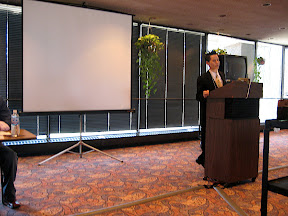
Southeast Asians in the Diaspora Conference, 15-16 April
The second (and successful) Southeast Asian/American studies conference was held this past week at the University of Illinois, Urbana-Champaign, hosted by the Asian American Studies Program and coinciding with the annual Association of Asian American Studies meeting in Chicago. This blog emerges out of the conference as a collaborative project tracking the field of Southeast Asian/American studies, collecting links, resources, and research for students, scholars, community organizations, and artists working in (and sometimes around) cultural and intellectual production about the categories and queries collected loosely, and sometimes uneasily, under the rubric of "Southeast Asians in the diaspora."
The exact contours of this project are still in development; for now, here is the 2008 conference site and our overview, as follows:
The exact contours of this project are still in development; for now, here is the 2008 conference site and our overview, as follows:
This two-day conference examines the emerging field of Southeast Asian/American studies, which because of specific histories of colonialism and imperialism, has produced subjects and objects of analysis that confound categories of diaspora, citizenship, and affiliation. Studies of the Cambodian, Laotian, and Vietnamese diasporas investigate and trouble the structuring effects of Cold War geopolitics; while studies of Hmong, Mien, Cham, and other stateless ethnicities necessarily reconsider the bases for global and local practices of identification as well as strategic claims to rights and resources.
Given this, the field foregrounds important epistemological and methodological shifts that productively disrupt the analytic conventions of area studies, American studies, ethnic studies, and Asian American studies. Thinking across these fields, Southeast Asian/American studies fulfills the intellectual and political promise of what Kandice Chuh imagines as "studies in comparative racialization and intersectional projects that deliberately unravel seemingly stable distinctions among identificatory categories and disciplinary divisions." Complicating the examination of nationalisms and transnationalisms, Southeast Asian/American studies questions the circulation of, the negotiation with, or challenges to the knowledge regimes of U.S. nation and empire.
Subscribe to:
Posts (Atom)